Cryo-TEM Characterization of Drug Delivery Systems
Per-Particle Imaging of Lipid-Based Carriers, Micelles, and Advanced Formulations
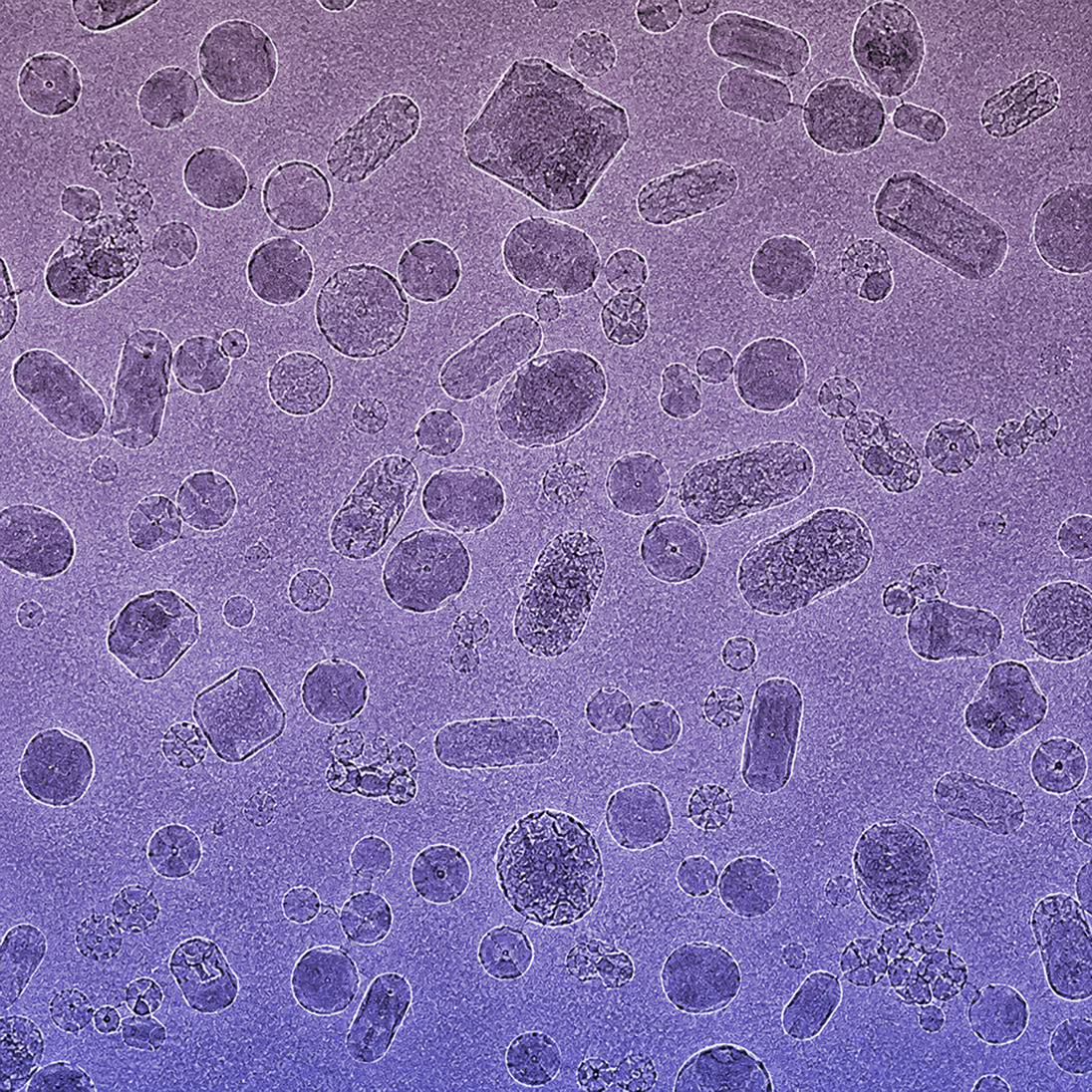
Lipid nanoparticles are increasingly used for drug delivery, however their tendency to be heterogeneous leads to challenges in characterization. Only cryo-TEM provides data on morphology, lamellarity, size distribution, and payload in just one study. Cryo-TEM imaging and automated analysis delivers powerful visualization that goes beyond bulk measurements, enabling per-particle insights into drug delivery payloads.
A single cryo-TEM imaging study can visualize individual particles in your formulation and simultaneously provide information on particle size, morphology, payload encapsulation, and structural integrity, all with only ~50μl of sample.
Lipid-Based Drug Delivery
Lipid Nanoparticles (LNPs)
Cryo-TEM imaging and automated analysis tools provide quantitative and qualitative analysis of lipid nanoparticles in their near-native state. Our LNP cryo-TEM imaging services provide flexible workflows designed around your specific needs, from quick high-volume cryo-TEM screening to in-depth imaging studies with quantitative and qualitative analysis.
Cryo-TEM has been critical for developing an understanding of how lipid nanoparticles form and how they encapsulate drugs. Distribution of cargo among LNPs has important implications for the dosage, efficacy, and safety of a therapeutic. Uneven payload distribution may lead to higher than necessary dosage of components such as PEG-lipids, while also making it difficult to predict the amount of drug that will reach target cells.
Got blebs? Cryo-TEM is the only technique that can reveal the presence of blebbing in LNP formulations. Direct visualization of individual LNPs along with per-particle analysis reveals the number and approximate size of blebs and whether blebs are empty or loaded.
Liposomes
Cryo-TEM imaging and automated analysis tools can provide insights into liposomal formulations in their near-native state, with just ~50μl of sample. Validated methods and data inform batch-to-batch, scale-up, and process development change comparisons.
Assess many characteristics of liposomes with one cryo-TEM study:
- Particle morphology
- Lamellarity, including bilayer thickness
- Uniformity
- Particle size distribution
- Estimations of PEG layer thickness
- Cargo encapsulation
- 3D volumes with cryo-electron tomography
Micelles
Nanoparticle size, shape, lamellarity, and morphology affect drug incorporation, stability, and release, which in turn affect cell toxicity, targeting, and therapeutic efficacy. Cryo-TEM imaging uncovers critical quality attributes (CQAs) that other techniques may overlook, providing a deeper understanding of micelle-based drug delivery formulations.
3D Structural Insights with Cryo-ET
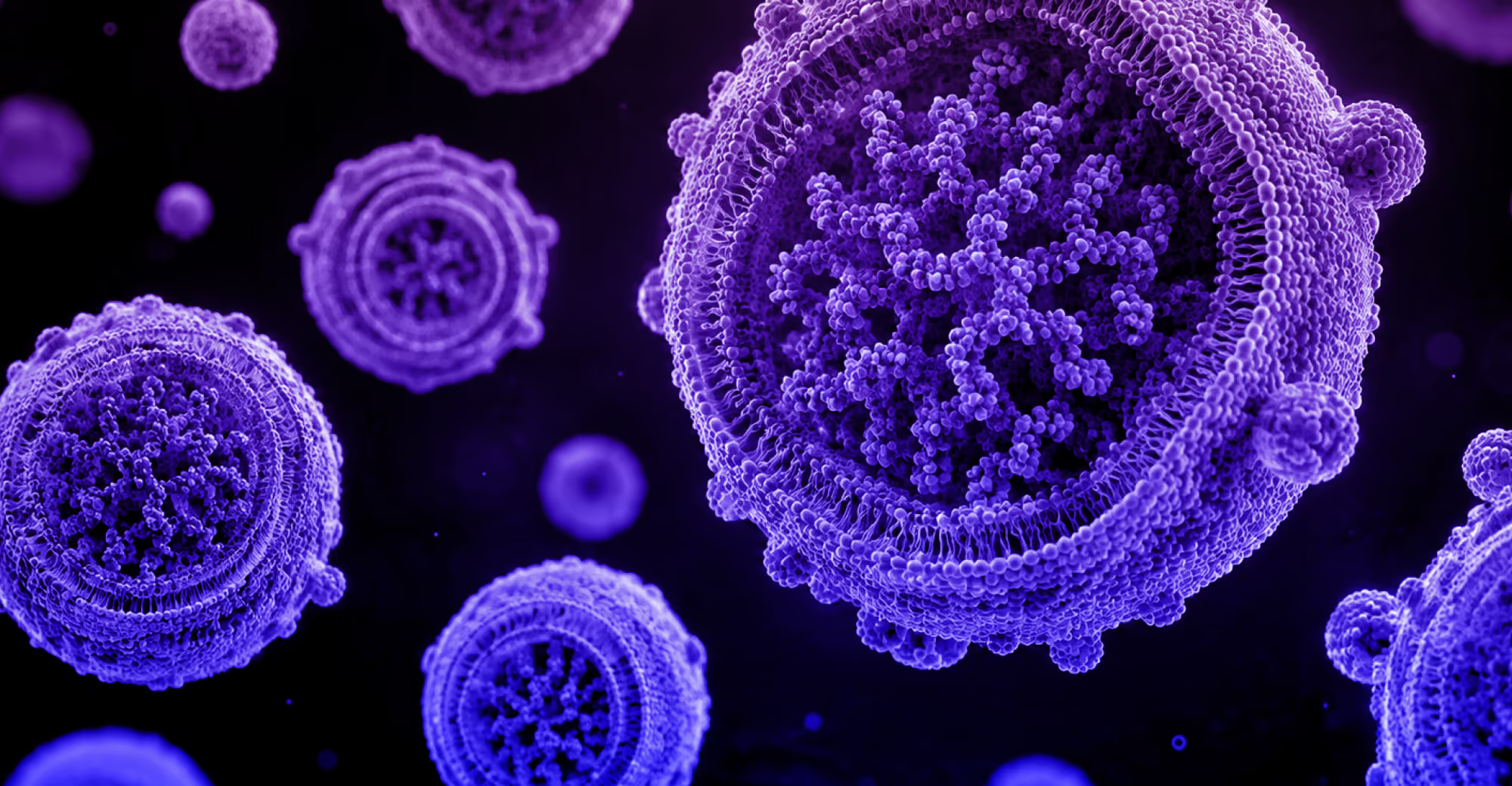
Cryo-Electron Tomography (cryo-ET) provides high-resolution, three-dimensional insights into heterogeneous nanoparticles, including liposomes, lipid nanoparticles (LNPs), and more. Unlike 2D imaging, cryo-ET reconstructs detailed 3D volumes which reveal crucial information about particle morphology and internal composition, including:
- Distribution of proteins on the surface of nanoparticles
- How encapsulated drugs are arranged inside individual particles
- Particle lamellarity
- Particle interactions
Stability and Regulatory Support
Comprehensive analysis of the effects of storage conditions (buffer, pH, temperature, time) on formulation morphology is crucial for maintaining formulation stability. Stability studies with cryo-TEM imaging can be done at any phase, and data generated from validated methods can be used for regulatory filings.
We are the first and only GMP-compliant cryo-TEM lab in North America. Phase-appropriate, method-validated characterization supports batch-to-batch reproducibility, scale up, comparability, and stability.
Our Drug Delivery Experience
We have imaged 3,700+ liposomal samples, including LNP, EV, and OMV projects. Our proprietary machine learning algorithms deliver quantitative insights into payload distribution and drug loading fraction that other methods miss.