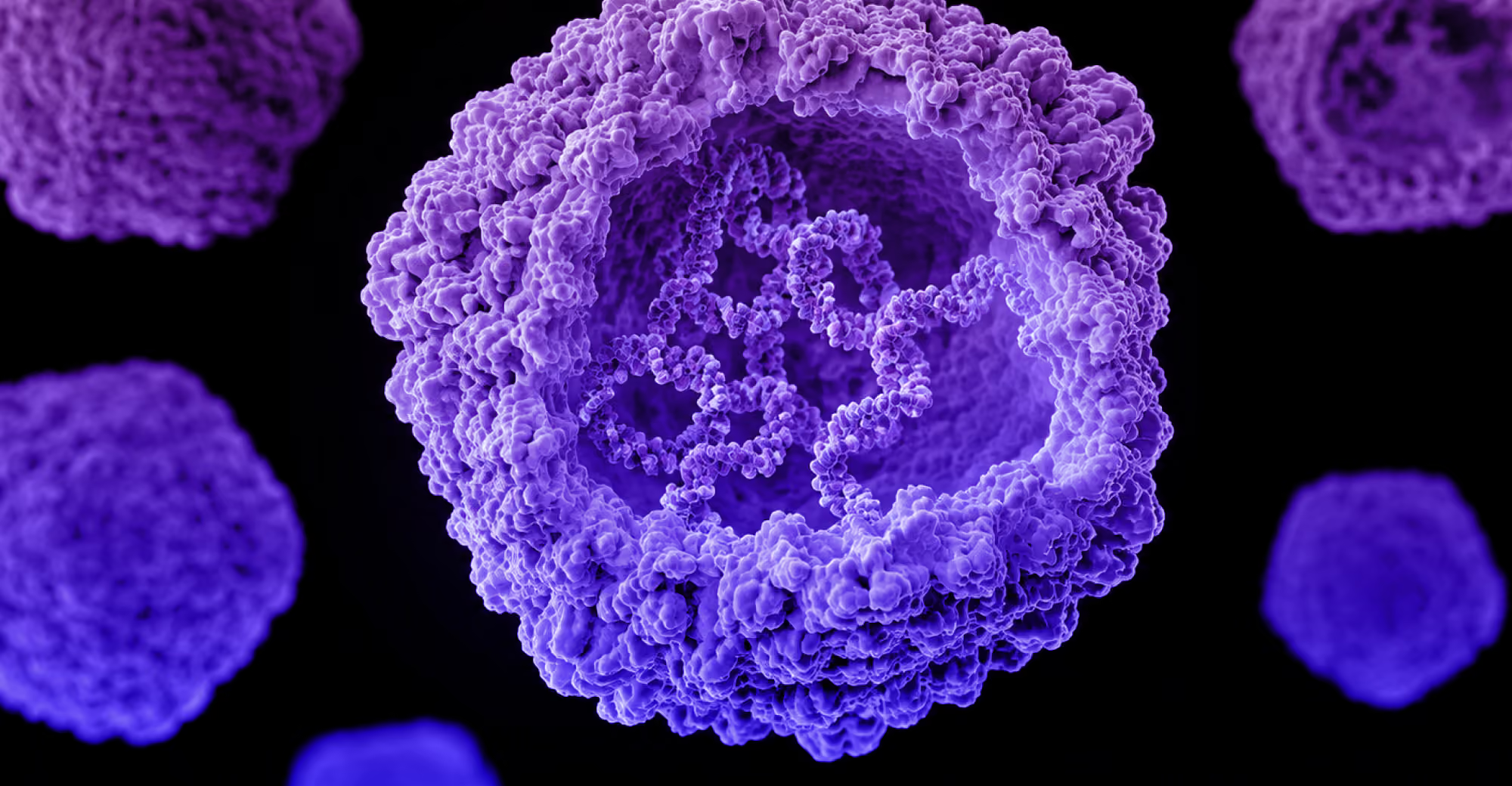
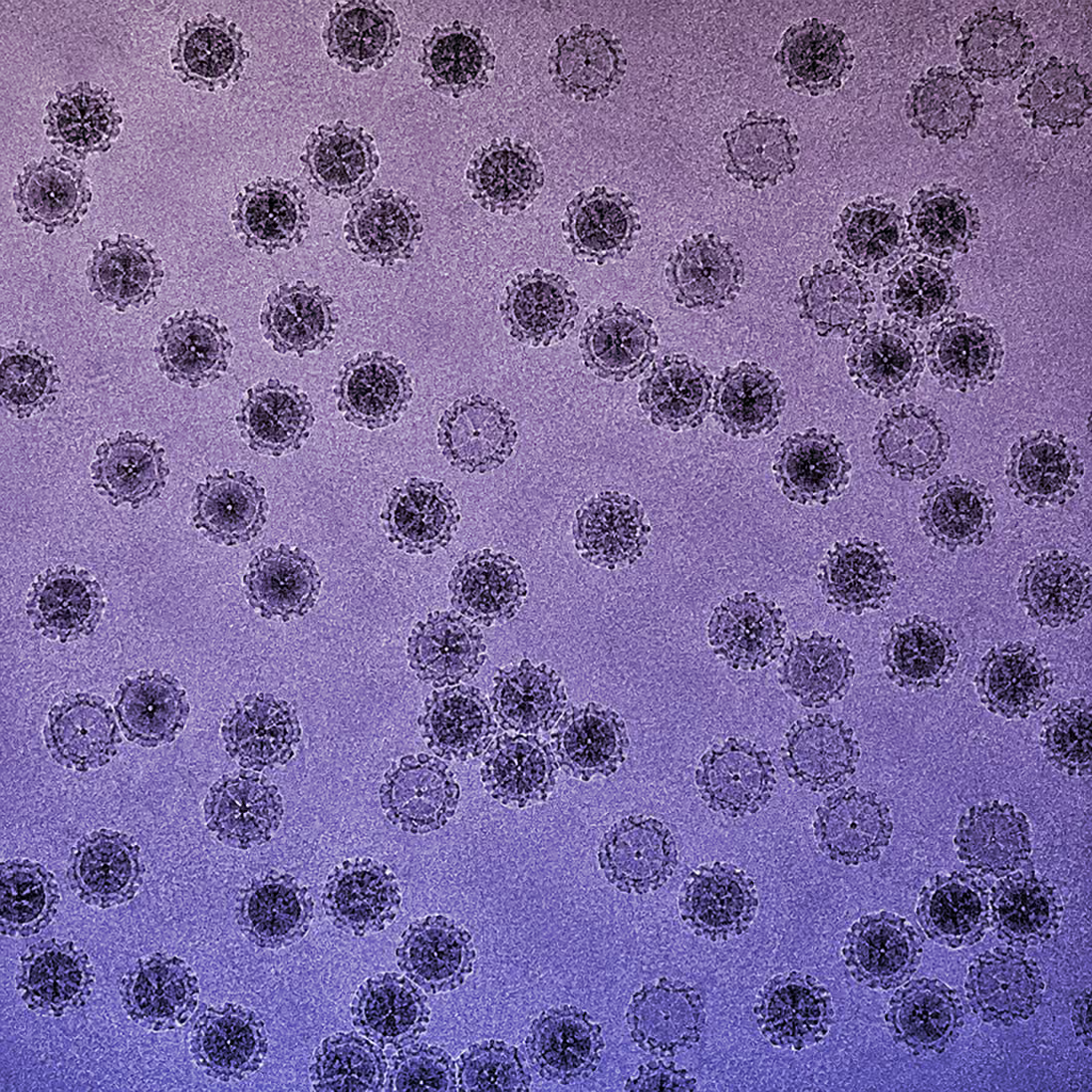
Cryo-TEM imaging paired with proprietary automated analysis tools delivers reliable, reproducible, per-particle insights into viral and non-viral gene delivery systems. The full/empty/partially full ratio of capsids is one of the most important critical quality attributes (CQAs) to characterize, as the fraction carrying the intended genome versus those that are empty, partially filled, or overfull directly affects the safety, efficacy, and immunogenicity of the product.
Non-Viral Vectors
Lipid Nanoparticles (LNPs) with mRNA, RNA, DNA Payloads
LNPs are increasingly used for gene delivery, however their tendency to be heterogeneous leads to challenges in characterization. Only cryo-TEM provides data on morphology, lamellarity, size distribution, and payload in just one study.
Cryo-TEM imaging can give precise data on:
- Nucleic acid payload distribution in lipid nanoparticles
- Encapsulation efficiency of gene payloads
- Particle morphology, including lamellarity and blebbing
- Particle size distribution
Cryo-TEM is the only technique that can reveal the presence of blebbing in LNP formulations. Direct visualization of individual LNPs along with per-particle analysis reveals the number and approximate size of blebs and whether blebs are empty or loaded.
Stability and Regulatory Support
Comprehensive analysis of the effects of storage conditions (buffer, pH, temperature, time) on formulation morphology is crucial for maintaining formulation stability. Stability studies with cryo-TEM imaging can be done at any phase, and data generated from validated methods can be used for regulatory filings.
We offer phase-appropriate cryo-TEM and Negative Stain (NS) TEM characterization studies for nanoparticle formulations with comprehensive support for regulatory submissions. Our quality team ensures compliance with 21 CFR 210-211, implementing robust cryo-TEM nanoparticle characterization using calibrated and qualified microscopes.
Our Gene Delivery Experience
We have imaged 220+ AAV samples and solved the 3D structure of AAV to 1.8 Å resolution. Our team regularly presents at the Gene Therapy Analytical Development Summit, discussing how cryo-TEM imaging and quantitative analysis can accelerate development of gene therapy formulations from R&D through to method validation.