Solve your novel GPCR with high resolution cryo-EM imaging.
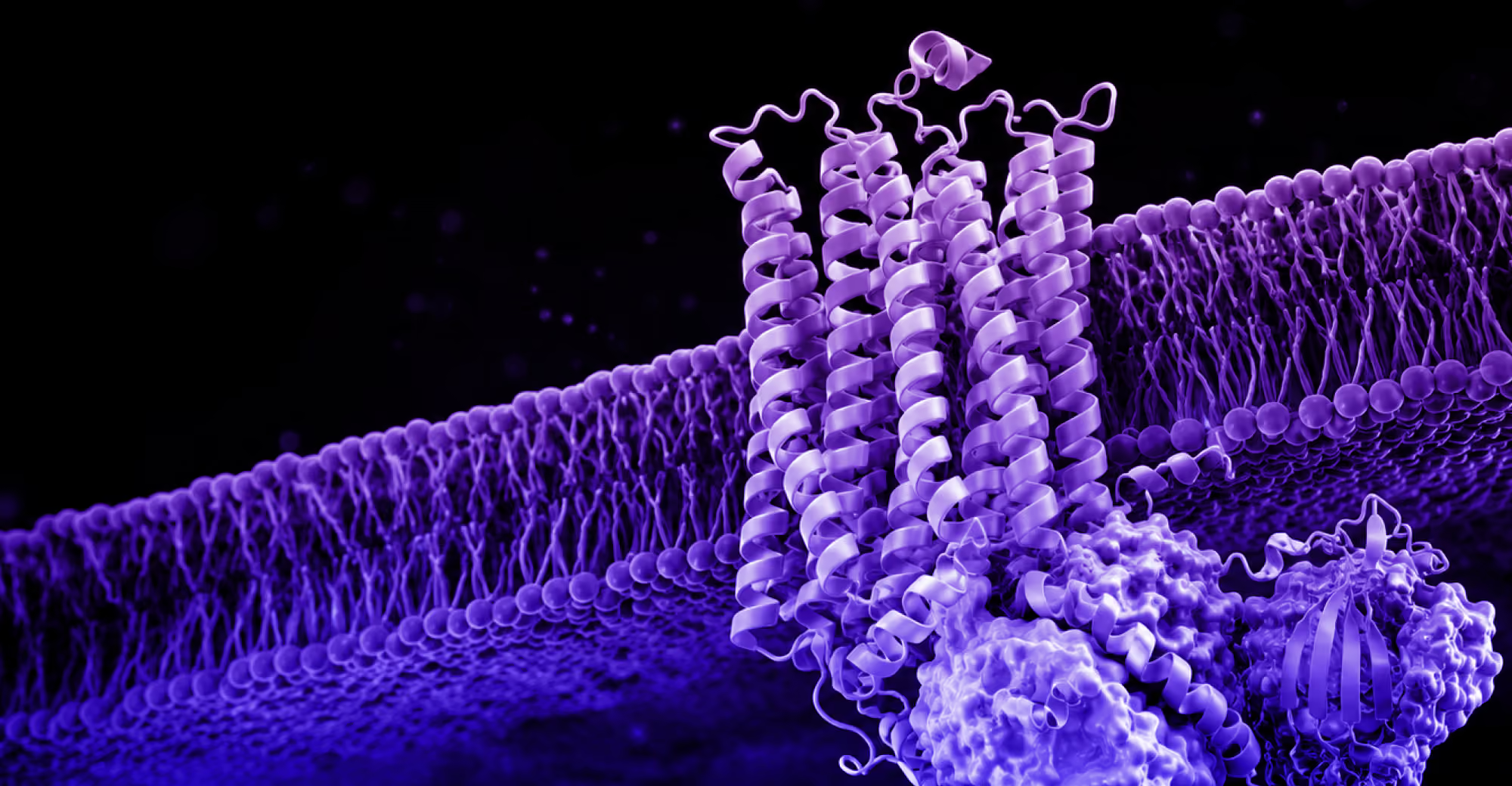
G-Protein Coupled Receptors (GPCRs) are the largest class of cell surface receptors that play a central role in transmitting signals from the extracellular environment to the interior of cells.
The significance of GPCRs in therapeutics stems from their involvement in numerous physiological processes. More than 30% of FDA-approved drugs act on 108 unique GPCR targets, and there are over 60 novel GPCR targets currently in clinical trials.
Why Cryo-EM for GPCRs
While traditional methods such as X-ray crystallography and NMR spectroscopy have been used to determine the 3D structures of proteins, GPCRs have posed significant challenges due to their complexity, flexible structures and their propensity to destabilize outside of their native cell membrane environment.
Cryo-EM overcomes most of these limitations and allows scientists to study GPCRs at near-atomic resolution. This capability is vital for understanding the intricate molecular interactions involved in GPCR activation and signaling.
In the period between 2020 and 2022, more structures of GPCRs have been determined than in the previous two decades, primarily through the use of cryo-EM. Cryo-EM accounted for 78% of the 99 GPCR structures deposited into the Protein Data Bank (PDB) between January and July 2021.
What Cryo-EM Reveals
Ligand binding and interaction with other proteins, such as G-proteins and arrestins, can induce various conformational states in GPCRs. Cryo-EM allows for the capture of these dynamic states, providing valuable insights into the mechanisms of action and signaling, further enhancing our understanding of GPCR biology.