Affinity Tags in Protein Production: Selection, Placement, and Removal
Affinity tags can simplify recombinant protein purification and detection, particularly when little biochemical information is available for the target. The same tag can also influence folding, activity, immunogenicity, or downstream assay performance. Tag strategy is therefore part of construct and process design, not a decision to defer until purification begins.
A practical plan starts with the intended use of the purified material. The team can then weigh tagged versus untagged production, select an affinity system, choose terminal placement, and decide whether removal is required. These choices should be tested with the target protein because purity, yield, cost, and functional performance may pull the workflow in different directions [1,2].
What Is an Affinity Tag?
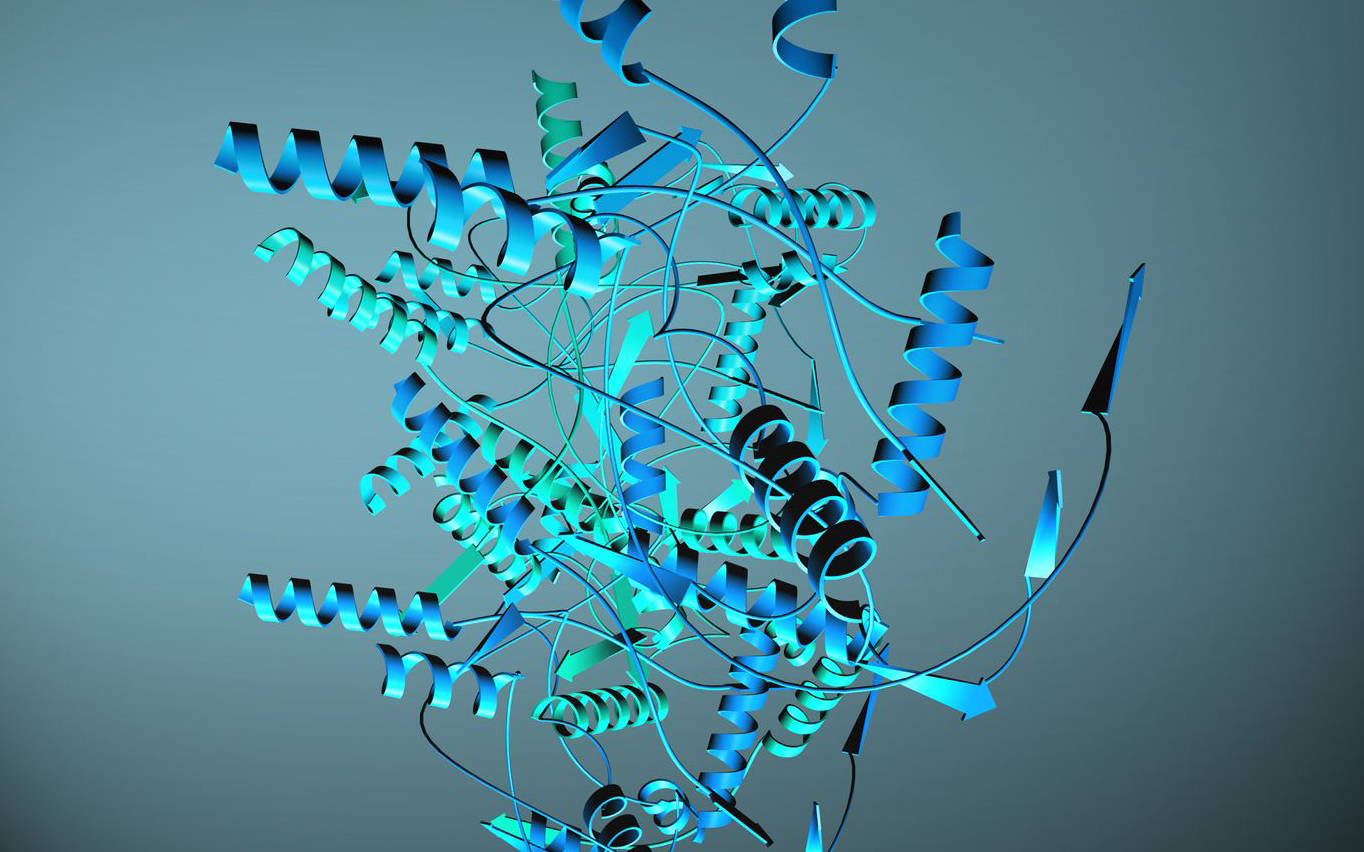
An affinity tag is a peptide or protein sequence added to a recombinant target to support purification or detection. The tag binds a compatible immobilized ligand or antibody, allowing the tagged product to be enriched from a more complex mixture. Common examples include His-tags used with immobilized metal affinity chromatography and FLAG tags captured with anti-FLAG reagents.
Affinity tags may also support detection in immunoassays when target-specific antibodies are unavailable. This can make them useful during expression and purification optimization, where a consistent tag-based assay can help compare constructs or process conditions. The tag and analytical format should still be evaluated for the intended downstream use.
Tagged vs Untagged Recombinant Proteins
Tagged production is generally attractive when a selective capture step can simplify purification or when a common detection reagent is useful during process development. Untagged production may be preferable when the native sequence is required, the tag is likely to affect the protein, or the downstream application cannot accommodate residual tag-related material.

Affinity Tags in Recombinant Antigen Production
Affinity tags can streamline recombinant antigen purification and can support downstream immunoassays. For antigens intended for antibody generation, the construct requires additional scrutiny because a tag may change antigen structure, mask an epitope, alter accessibility, or become an unintended target of the immune response.
When a removable tag may be appropriate
A removable design can retain the operational value of affinity capture while allowing the antigen to be evaluated in a tag-free state. The cleavage site is introduced between the antigen and tag, then the tag is removed during purification. The design should account for the residues left after cleavage and for the separation steps needed after the reaction.
Antigen-specific checks before use
- Confirm that the tagged construct expresses and remains soluble under the intended production conditions.
- Compare binding or activity in the context of the intended assay rather than relying on purification behavior alone.
- Assess whether the tag or its placement could obscure an epitope or change the antigen conformation.
- For immunization material, evaluate whether tag-directed responses could interfere with the desired antibody campaign.
- If the tag is removed, confirm cleavage and clearance of the tag, protease, and uncleaved product.
How to Select an Affinity Tag for Protein Production
Tag selection is a multi-variable decision. Purity, yield, cost, compatibility with the target, buffer requirements, and downstream use may not favor the same option. Published comparisons also show that affinity systems can behave differently across expression hosts and sample backgrounds, supporting empirical evaluation for the intended workflow [1].
Selection questions to answer before construct design
- What purity and recovery are required for the next experiment?
- Will the target tolerate the binding, wash, and elution conditions of the selected affinity system?
- Could the tag affect folding, catalytic activity, binding, immunogenicity, or assay readout?
- Does the expression host contribute proteins or other components that may interact with the resin?
- Will the tag remain on the final protein, and if so, is that acceptable for the intended use?
- If removal is planned, can the cleavage and post-cleavage separation be built into the workflow from the start?
Affinity Tag Placement in Construct Design
Affinity tags are commonly placed at the N-terminus or C-terminus of a recombinant protein. Multiple tags can be used on one construct, either consecutively or at opposite termini. Placement should be selected with the target structure, accessible termini, secretion or processing signals, and downstream function in mind.
A tag can interfere with native structure, stability, catalytic activity, or binding interactions. A small construct panel that tests plausible terminal placements can provide stronger evidence than assuming one orientation will be neutral. When removal is possible, a protease-cleavage sequence can be positioned between the tag and protein sequence.
Affinity Tag Removal and Post-Cleavage Purification
When the final application requires an untagged product, a site-specific protease can be used to cleave a designed sequence between the affinity tag and target. Examples include TEV, HRV3C, and thrombin. Protease choice should reflect cleavage-site compatibility, reaction conditions, nonspecific cleavage risk, and the downstream separation plan [3,4,5].
Two practical points of protease addition
- Add protease directly to the eluted affinity-chromatography pool, then separate the cleaved target from the tag, protease, and uncleaved material.
- Add protease to resin carrying the bound tagged protein when the affinity system and cleavage conditions support an on-resin reaction.
Negative affinity chromatography after cleavage
If the protease carries a compatible affinity tag, the cleavage mixture can be passed over the corresponding resin. The affinity-tagged protease, released tag, and uncleaved tagged protein are retained, while the cleaved target is collected in the flow-through. This logic can simplify isolation of the untagged product, but the capture capacity and clearance performance should be verified for the actual mixture [3].
A Practical Affinity-Tag Development Workflow
- Define the required final state: tagged, untagged, or tagged during purification and cleaved afterward.
- Select candidate affinity systems based on target properties, expression host, required purity, expected recovery, buffer compatibility, cost, and downstream use.
- Design terminal placement and, when needed, a protease-cleavage sequence before constructs are ordered.
- Screen expression, solubility, capture, wash, and elution behavior at a scale suited to comparing constructs and conditions.
- Verify identity, purity, aggregation state, and the activity or binding property that matters for the application.
- If removal is required, optimize cleavage and the post-cleavage separation as part of the same process rather than as an isolated reaction.
- Select the workflow that balances product quality, recovery, operational complexity, and intended use.
Frequently Asked Questions
What is an affinity tag?
An affinity tag is a peptide or protein sequence added to a recombinant target to support selective purification or detection. It binds a compatible ligand, metal-chelate resin, or antibody-based capture reagent.
What are protein affinity tags used for?
Protein affinity tags are used to simplify capture from complex mixtures and to provide a common detection handle. They can support purification development, expression comparisons, immunoassays, and other downstream workflows.
What is the difference between tagged and untagged recombinant proteins?
A tagged recombinant protein contains an added sequence that supports purification or detection. An untagged protein retains the target sequence without that added handle. A third strategy uses a tag during purification and removes it before the final application.
Are affinity tags useful for recombinant antigens?
They can simplify antigen purification and detection. The design should also consider whether the tag could alter antigen structure, obscure epitopes, or become an unintended target during antibody production.
Should an affinity tag be placed at the N-terminus or C-terminus?
Either terminus may be suitable. The choice depends on target structure, accessible termini, native processing signals, function, and whether a cleavage site is needed. Testing more than one plausible placement can reduce design risk.
How are affinity tags removed from recombinant proteins?
A designed cleavage site can be recognized by a site-specific protease such as TEV, HRV3C, or thrombin. The process also needs a separation step to remove the released tag, protease, and any uncleaved tagged product.
Does an affinity tag always need to be removed?
Removal depends on the intended use and on evidence that the tag is compatible with target structure, function, and assay performance. Some workflows retain the tag, while others require a tag-free final product.
References
[1] Lichty JJ, Malecki JL, Agnew HD, Michelson-Horowitz DJ, Tan S. Comparison of affinity tags for protein purification. Protein Expression and Purification. 2005;41(1):98-105. DOI: 10.1016/j.pep.2005.01.019. View DOI record
[2] Young CL, Britton ZT, Robinson AS. Recombinant protein expression and purification: a comprehensive review of affinity tags and microbial applications. Biotechnology Journal. 2012;7(5):620-634. DOI: 10.1002/biot.201100155. View DOI record
[3] Tropea JE, Cherry S, Waugh DS. Expression and purification of soluble His-tagged TEV protease. Methods in Molecular Biology. 2009;498:297-307. DOI: 10.1007/978-1-59745-196-3_19. View DOI record
[4] Jenny RJ, Mann KG, Lundblad RL. A critical review of the methods for cleavage of fusion proteins with thrombin and factor Xa. Protein Expression and Purification. 2003;31(1):1-11. DOI: 10.1016/S1046-5928(03)00168-2. View DOI record
[5] Kruse T, Kanwal F, Jarvis L, et al. NT*-HRV3CP: An optimized construct of human rhinovirus 14 3C protease for high-yield expression and fast affinity-tag cleavage. Protein Expression and Purification. 2021;178:105774. DOI: 10.1016/j.pep.2020.105774.
.png)
.png)
.png)