
Protein Aggregation: Solubility, Prevention and Analytical Methods
Protein aggregation can arise during expression, purification, concentration, handling, or storage. The practical response is to define the form of aggregation that matters to the project, identify the process conditions associated with change, and use complementary analytical methods to evaluate the sample.
Solubility and aggregation are related but distinct. A visibly clear sample may contain soluble oligomers, while precipitation represents a later or different outcome. Method selection should therefore reflect the expected aggregate size, interaction type, sample matrix, and decision the data must support. [1-4]
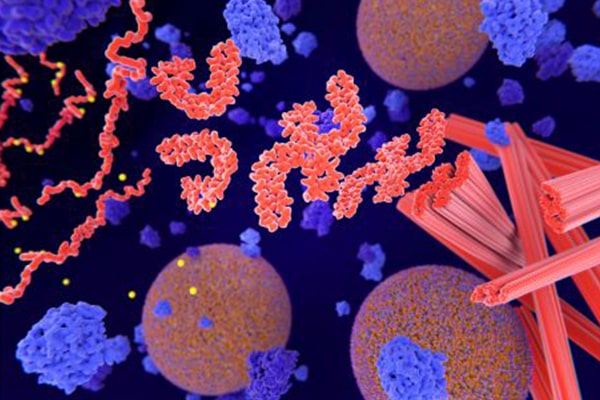
What Is Protein Aggregation?
Protein aggregation is the association of protein molecules into oligomers, larger assemblies, particles, or precipitated material. Aggregates can differ in size, reversibility, morphology, and the interactions that hold them together. Their relevance depends on the intended use of the protein and the sensitivity of downstream experiments.
Soluble and insoluble aggregates
Soluble aggregates may remain in an apparently clear solution and still alter structure, function, binding, or analytical results. Insoluble aggregates may appear as turbidity, visible particles, or precipitate and can reduce recoverable material.
Covalent and noncovalent associations
Aggregate detection can depend on whether molecules are associated through disulfide bonds, other covalent links, or noncovalent interactions. Sample treatment may disrupt one class while preserving another, so analytical conditions are part of the interpretation.
Protein Solubility and Solubility Optimization
Protein solubility should be evaluated throughout expression and purification because poor solubility can reduce recovery and complicate scale-up. Host and construct selection provide an early opportunity to influence solubility. If the target remains poorly soluble, expression conditions, purification workflow, buffer composition, and handling can be evaluated systematically.
Expression-system and construct considerations
Some complex eukaryotic proteins expressed in bacteria may accumulate in insoluble inclusion-body material. [5] Recovery and refolding may be possible for some targets, but success is target-dependent. Insect or mammalian expression may be considered when eukaryotic folding and processing are important to the required product form.
Buffer and pH screening
Buffer, ionic strength, pH, and selected excipients may affect colloidal and conformational stability. Proteins can be less soluble near their isoelectric point, so pH selection should be evaluated relative to the protein and process rather than treated as a universal rule.
Concentration and sample history
Aggregation risk may change as a sample is concentrated or exposed to purification, holding, freeze-thaw, or storage conditions. [1,5] Record concentration, buffer, temperature history, handling steps, and timepoints so observed changes can be linked to process history.
How to Prevent Protein Aggregation
Aggregation control is usually a combination of molecular design, expression strategy, formulation, and process handling. The most useful controls are those connected to a defined stress or failure mode and verified with an appropriate assay.
Protein Aggregation Assay: Match the Method to the Question[a]
No single assay covers every aggregate type and size range. A practical panel combines methods that answer different questions and checks whether sample preparation could create, disrupt, or exclude the species of interest. [1-4]
SDS-PAGE for Determining Aggregation
Reduced and nonreduced SDS-PAGE can provide different information about covalent associations. A higher-molecular-weight species in the nonreduced condition that changes after reduction may be consistent with disulfide-linked material. Because SDS disrupts many noncovalent interactions, the method should be interpreted as one component of an aggregation panel rather than a native-state measurement. [2]
Understanding Aggregation With HPLC-SEC
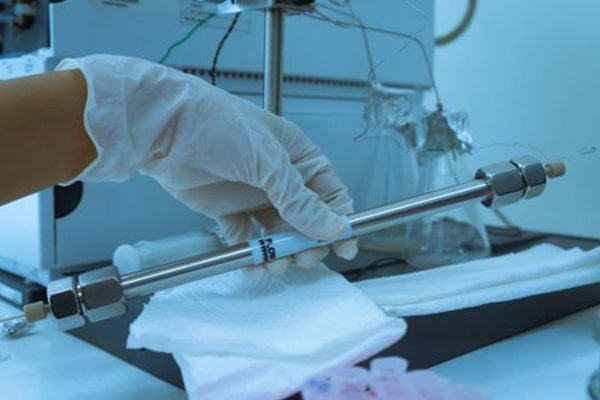
HPLC-SEC separates soluble species according to their behavior in a porous stationary phase under the selected mobile-phase conditions. Multiple peaks or changes in a higher-molecular-weight region may indicate sample heterogeneity, but peak identity should be supported by controls or an orthogonal method. Retention behavior, peak area, recovery, and comparison with an appropriate standard or detector can inform interpretation. [3,4]
Using SEC to compare process or storage states
Matched pre- and post-process samples can help identify changes associated with purification, concentration, freeze-thaw, or storage. The comparison should control concentration, buffer, injection conditions, and sample preparation so that the process state remains the main variable.
A Practical Aggregation Investigation Workflow
Define the observed problem and the decision the study must support.
Document sample history, including expression, purification, concentration, buffer, temperature, handling, and storage.
Choose a native-state or near-native method for soluble species and a complementary method for covalent or particulate material.
Include relevant controls, standards, and matched process states.
Check whether filtration, dilution, reduction, detergent, or other preparation steps alter the species of interest.
Compare recovery, monomer or main-species signal, higher-molecular-weight species, visible particles, and function as appropriate.
Use the results to revise the expression, purification, formulation, handling, or storage plan, then confirm the change with the same decision criteria.
Frequently Asked Questions
What is a protein aggregation assay?
A protein aggregation assay is an analytical method used to detect or characterize associated protein species. The appropriate assay depends on aggregate size, solubility, interaction type, sample matrix, and the decision the data must support.
How do you measure protein aggregation?
Use a method matched to the expected species, then add an orthogonal method when needed. SEC can assess soluble higher-molecular-weight species, and SDS-PAGE can inform selected covalent associations.
How can protein aggregation be detected?
Detection may include changes in SEC profiles, reduced versus nonreduced electrophoresis, particle-size measurements, visible or subvisible particles, turbidity, sedimentation, or microscopy. No single result covers every aggregate class.
How can protein aggregation be prevented during sample preparation?
Control temperature, mixing, hold times, surfaces, concentration, buffer conditions, and unnecessary freeze-thaw or handling. Select controls based on the protein and verify them with a suitable assay.
What is the difference between protein solubility and aggregation?
Solubility describes how much protein remains dispersed in solution under defined conditions. Aggregation describes protein-protein association and may remain soluble or progress to particles and precipitation.
Can SDS-PAGE detect protein aggregation?
SDS-PAGE can reveal selected covalent aggregate patterns, especially when reduced and nonreduced samples are compared. SDS disrupts many noncovalent aggregates, so native or separation-based methods may also be needed.
How does HPLC-SEC detect protein aggregation?
HPLC-SEC separates soluble species by their chromatographic behavior under selected conditions. Higher-molecular-weight regions can indicate aggregates, but recovery, column interactions, standards, and orthogonal evidence should be considered.
Does glycerol improve protein stability?
Glycerol may be useful in some formulations, but its effect is protein- and condition-dependent. It should be screened alongside appropriate controls and evaluated with the intended stability and function readouts.
Discuss Your Protein Production and Characterization Project
TrueCourse can help connect expression strategy, purification, formulation screening, handling studies, and orthogonal analytical methods to the decisions required for a fit-for-use recombinant protein sample.
References
Peer-reviewed sources supporting the scientific context:
1. Mahler HC, Friess W, Grauschopf U, Kiese S. Protein aggregation: pathways, induction factors and analysis. Journal of Pharmaceutical Sciences. 2009;98(9):2909-2934. doi:10.1002/jps.21566. Source
2. den Engelsman J, et al. Strategies for the assessment of protein aggregates in pharmaceutical biotech product development. Pharmaceutical Research. 2011;28:920-933. doi:10.1007/s11095-010-0297-1. Source
3. Hong P, Koza S, Bouvier ESP. Size-exclusion chromatography for the analysis of protein biotherapeutics and their aggregates. Journal of Liquid Chromatography & Related Technologies. 2012;35(20):2923-2950. doi:10.1080/10826076.2012.743724. Source
4. Fekete S, Beck A, Veuthey JL, Guillarme D. Theory and practice of size exclusion chromatography for the analysis of protein aggregates. Journal of Pharmaceutical and Biomedical Analysis. 2014;101:161-173. doi:10.1016/j.jpba.2014.04.011. Source
5. Wang W, Roberts CJ. Protein aggregation: mechanisms, detection, and control. International Journal of Pharmaceutics. 2018;550(1-2):251-268. doi:10.1016/j.ijpharm.2018.08.043. Source
[a]Omit this section if below table seems too limited. I have omitted methods we do not have.