
Recombinant Antigen Production: From Construct to Fit-for-Use Protein
Recombinant antigen production begins with the intended use of the protein. An antigen for antibody discovery, immunoassay development, structural analysis, or another research application may require a particular sequence boundary, folding state, post-translational modification profile, purity, or presentation of conformational epitopes.
A practical workflow connects antigen design, expression-system selection, purification, and analytical confirmation. The objective is a reproducible protein preparation that represents the relevant antigenic features closely enough for the planned assay or discovery program.
What Is a Recombinant Antigen?
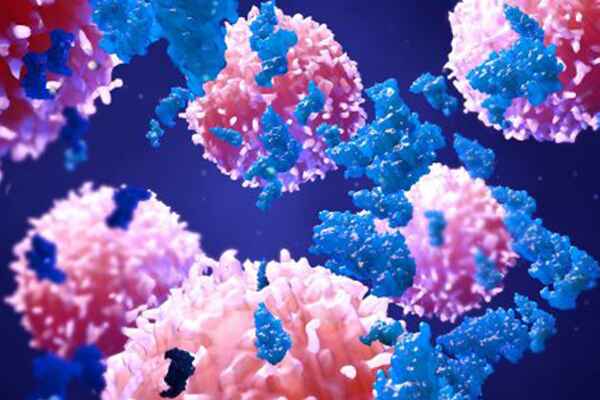
An antigen is a substance, often a protein, that can be recognized by the immune system and may elicit an immune response. A recombinant antigen is produced by introducing an engineered DNA sequence into an expression host, then recovering and purifying the expressed protein. Recombinant production can provide a consistent source when native material is scarce, difficult to isolate, or variable between preparations. [1,2]
Native versus recombinant antigens
Native antigens originate from their biological source and may preserve the source-associated molecular context. Their availability, purity, and batch consistency can be limiting. Recombinant antigens allow the sequence, construct boundaries, tags, and production host to be defined, but the resulting protein should still be evaluated for the structural and functional features required by the application.
Recombinant Antigen Production
Production is an iterative process. Early decisions about sequence boundaries and expression host can affect soluble recovery, purification, folding, post-translational modifications, and assay performance. Small-scale expression and purification provide evidence for selecting a construct before larger production is attempted.
- Design one or more constructs with justified boundaries, signal sequences, and affinity tags.
- Select an expression system based on folding, modification, localization, throughput, and downstream requirements.
- Run small-scale expression tests and compare soluble or secreted recovery.
- Develop purification conditions that preserve the intended protein state.
- Characterize identity, purity, integrity, aggregation, and function as appropriate.
- Select the construct and process that meet the fit-for-use criteria, then confirm performance at the next scale.
How to Select an Expression System for Recombinant Antigen Production
There is no universal expression host for every antigen. Selection should reflect whether the target requires eukaryotic folding or processing, whether a secreted format is preferred, how the antigen will be purified, and how closely the recombinant product must resemble the native counterpart. [1-4]
Bacterial versus mammalian expression
Bacterial expression can be appropriate for antigens that do not depend on eukaryotic processing. For some eukaryotic targets, bacterial production may yield an altered structure or reduced function relative to the native protein. Mammalian expression may better support native-like folding and post-translational modification, while requiring a different production and purification strategy.
Insect-cell expression as an alternative option
Insect cells provide eukaryotic folding and trafficking machinery and are commonly used with baculovirus-mediated expression. They can be useful when bacterial production is unsuitable and a mammalian system is not required, although processing differences should be assessed against the intended use. [3]
Construct Design and Affinity Tags
Construct boundaries should preserve the antigenic region needed for the application while removing sequence elements that are unnecessary or disruptive in the selected host. For secreted proteins, signal-sequence selection can influence recovery. Affinity tags can simplify purification, but tag position, linker design, accessibility, and any planned cleavage should be considered during construct design.
Use small-scale screening to reduce uncertainty
A limited panel can compare boundaries, tags, signal sequences, or hosts under matched conditions. Evaluate expression together with soluble or secreted recovery and product quality. Higher expression alone may not identify the most useful antigen.
Purification and Characterization of Recombinant Antigens
Antibody-Antigen Complexes and Assay Performance
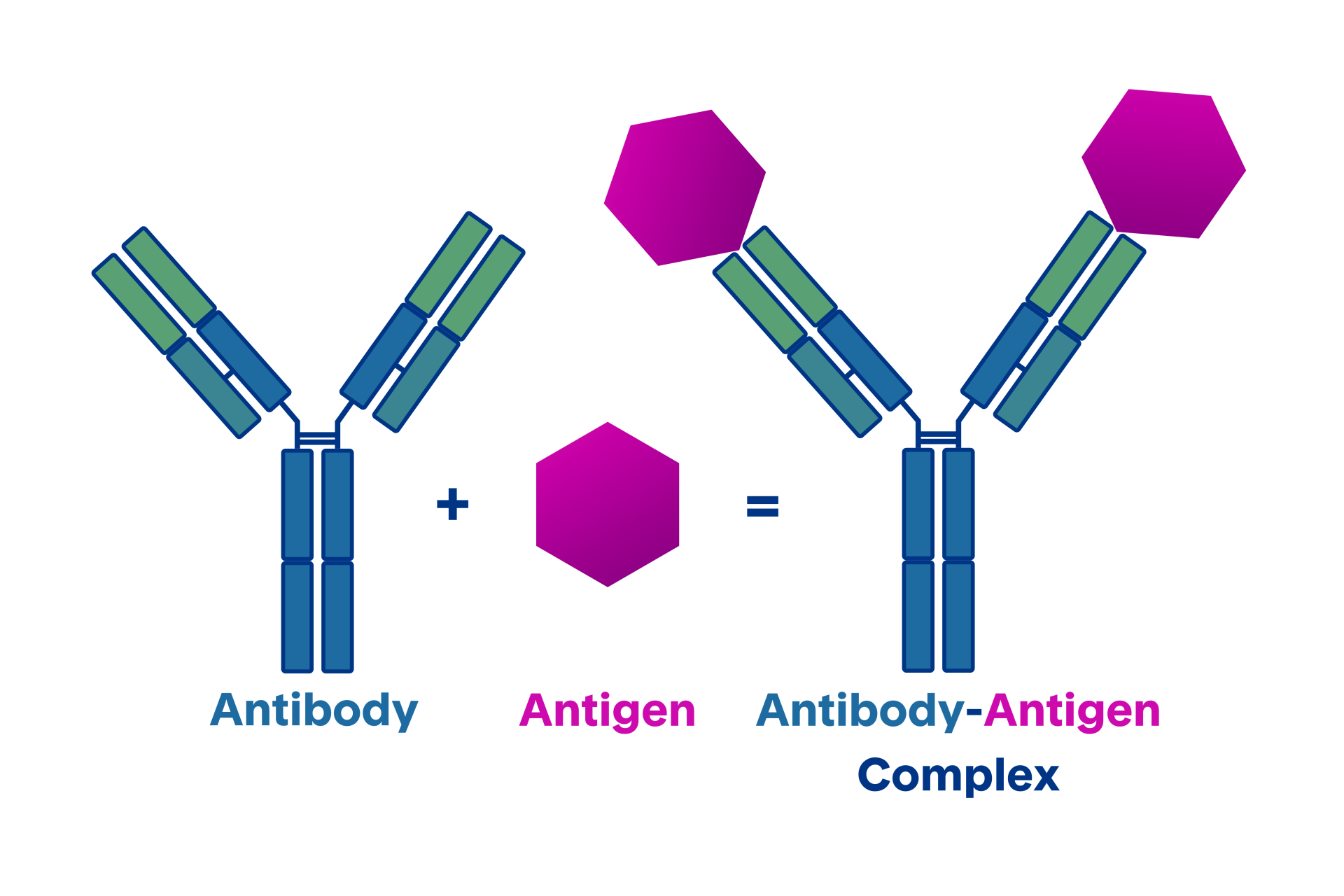
An antibody-antigen complex forms when an antibody binds an accessible epitope on the antigen. Recombinant-antigen quality can influence this interaction. Misfolding, truncation, aggregation, tag interference, or an unsuitable immobilization format may change epitope presentation and complicate interpretation.
Binding data should therefore be interpreted with the antigen construct, host, purification history, and assay format in view. Where conformational recognition matters, orthogonal evidence for folding and binding can strengthen confidence in the reagent.
Applications of Recombinant Antigens
Recombinant antigens for diagnostics
Recombinant antigens can serve as capture or detection reagents in immunoassays. The sequence, folding state, purity, immobilization behavior, and lot consistency should be aligned with the assay design and the antibody response the test is intended to measure. [5]
Antibody discovery and characterization
Defined recombinant antigens can support immunization, screening, selection, binding assays, and specificity studies. Construct variants may be useful for epitope localization or for separating sequence-specific recognition from tag, scaffold, or host-related effects.
Frequently Asked Questions
What is a recombinant antigen?
A recombinant antigen is an antigen produced from an engineered DNA sequence in a selected expression host, followed by recovery and purification of the expressed protein.
How are recombinant antigens made?
A typical workflow includes construct design, expression-system selection, small-scale testing, production, purification, and characterization against fit-for-use criteria.
What are the main recombinant antigen production methods?
Common approaches use bacterial, insect, or mammalian expression. The appropriate method depends on the target’s folding, modification, secretion, purification, and application requirements.
Which expression system should be used for recombinant antigen production?
Choose the host that best supports the required antigen form. Bacterial systems can suit proteins that do not require eukaryotic processing. Insect or mammalian cells may be considered for more complex eukaryotic targets.
What is the difference between a native antigen and a recombinant antigen?
A native antigen is isolated from its biological source. A recombinant antigen is produced from an engineered sequence in an expression host. Each should be evaluated for the features required by the intended assay or study.
What is an antibody-antigen complex?
It is the bound state formed when an antibody recognizes an accessible epitope on an antigen. Antigen folding, integrity, aggregation, and presentation can influence the measured interaction.
Why are recombinant antigens used for diagnostics?
They can provide a defined and reproducible reagent source. Suitability depends on whether the recombinant construct presents the epitopes and quality attributes required by the assay.
Do affinity tags affect recombinant antigen performance?
They can simplify purification, but tag position or accessibility may affect folding, immobilization, or antibody binding. Tagged and tag-cleaved formats can be compared when interference is a concern.
Discuss Your Recombinant Antigen Project
TrueCourse can help connect construct design, expression-system selection, small-scale screening, purification, and analytical characterization to the intended use of a recombinant antigen.
References
Peer-reviewed sources supporting the scientific context:
1. Tripathi NK, Shrivastava A. Recent developments in bioprocessing of recombinant proteins: expression hosts and process development. Frontiers in Bioengineering and Biotechnology. 2019;7:420. doi:10.3389/fbioe.2019.00420. Source
2. Rosano GL, Ceccarelli EA. Recombinant protein expression in Escherichia coli: advances and challenges. Frontiers in Microbiology. 2014;5:172. doi:10.3389/fmicb.2014.00172. Source
3. McKenzie EA, Abbott WM. Expression of recombinant proteins in insect and mammalian cells. Methods. 2018;147:40-49. doi:10.1016/j.ymeth.2018.05.013. Source
4. Bandaranayake AD, Almo SC. Recent advances in mammalian protein production. FEBS Letters. 2014;588(2):253-260. doi:10.1016/j.febslet.2013.11.035. Source
5. Warnes A, Fooks AR, Stephenson JR. Design and preparation of recombinant antigens as diagnostic reagents in solid-phase immunosorbent assays. Methods in Molecular Medicine. 2004;94:373-391. doi:10.1385/1-59259-679-7:373. Source