
Recombinant Protein Quality: Methods for Analysis and Characterization
A recombinant protein can appear acceptable by concentration alone while still containing impurities, fragments, disulfide-linked species, or soluble aggregates. Quality assessment should therefore combine methods that answer different questions about purity, structural integrity, aggregation state, stability, and suitability for the intended downstream use.
A practical panel can pair SDS-PAGE with HPLC-SEC, and an endotoxin assay when the application requires it. Comparing material before and after relevant handling stress, such as freeze-thaw exposure, can add stability context. The resulting evidence is more useful than relying on one assay as a complete quality judgment [1,2].
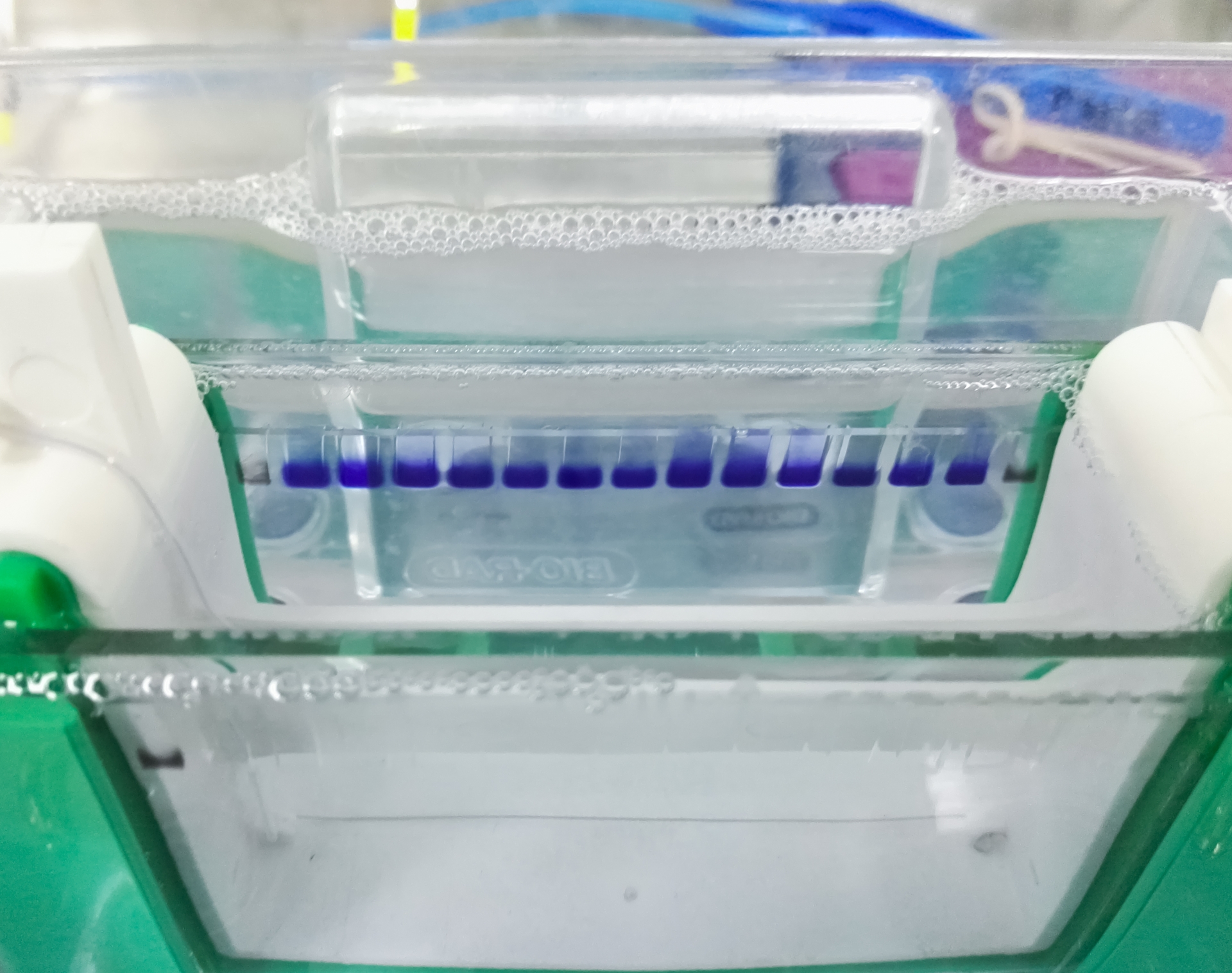
Recombinant Protein Analysis and Characterization
Recombinant protein analysis should begin with the question the material must answer next. A sample intended for an immunoassay, immunization, binding study, or structural workflow may require different evidence. In each case, the analytical plan should distinguish identity, purity, structural integrity, homogeneity, aggregation, and contaminants rather than treating protein quality as one interchangeable metric [1].
An answer-first quality checklist
- Does the sample contain a dominant species at the expected apparent molecular mass under reducing conditions?
- Do reduced and non-reduced gel patterns suggest disulfide-linked species or changes in structural integrity?
- Does the sample remain predominantly monomeric under native analytical conditions?
- Does handling or freeze-thaw exposure change the aggregate profile?
- Is endotoxin controlled to a level appropriate for the planned assay or in vivo use?
- Do identity and function support the intended downstream application?
SDS-PAGE for Purity and Structural Integrity
SDS-PAGE separates denatured proteins primarily by apparent molecular mass. Protein staining can show the dominant product band and visible impurities. Comparing reduced and non-reduced preparations can also reveal disulfide-linked species that may indicate covalent aggregation or unexpected intermolecular associations.
How to interpret the gel
- Compare the dominant band with a molecular-mass marker and the expected construct size.
- Review lower bands as possible fragments and higher bands as possible oligomers, aggregates, or other contaminants.
- Compare reduced and non-reduced lanes when disulfide-linked species are relevant to the construct.
- Use densitometry only with a defined staining and analysis procedure, because band intensity is not automatically equivalent to absolute mass fraction.
- Use an orthogonal identity method when band position alone cannot confirm that the visible species is the intended protein.
Analytical HPLC-SEC for Aggregation and Stability
Analytical HPLC-SEC separates soluble species according to their behavior in a size-exclusion column under native conditions. It can show the relative distribution of monomer, earlier-eluting high-molecular-weight species, and later-eluting low-molecular-weight species. Method development should consider protein-column interactions and recovery because SEC behavior can be influenced by more than hydrodynamic size [2].
Using freeze-thaw comparison
Analyze comparable aliquots before and after the planned freeze-thaw exposure. A change in the HPLC-SEC profile can indicate that handling contributes to soluble aggregation or fragmentation. The comparison should use controlled sample history, formulation, concentration, and analytical conditions so the observed difference can be interpreted in context.
Endotoxin Testing for Recombinant Protein Samples
Endotoxin can confound cell-based, immunological, and in vivo studies. The Limulus amebocyte lysate assay, or LAL assay, is used to detect or quantify bacterial endotoxin. The result should be interpreted against a predefined limit that reflects the intended application, sample dose, and experimental design rather than a universal acceptance value [3,4].
Matrix interference can affect endotoxin recovery. A suitable test plan therefore includes appropriate standards and controls and demonstrates that the sample matrix supports a meaningful result. Current regulatory guidance also recognizes bacterial endotoxin test approaches using recombinant reagents, with method suitability verified for the material and conditions of use [4].
Recombinant Protein Quality Methods Compared
Recombinant Antigen Quality for Production and Downstream Use
For recombinant antigens, analytical quality should be connected to the planned immunoassay or immunization. A preparation may require evidence for purity, structural integrity, aggregation state, endotoxin, identity, and antigen recognition. The exact panel depends on whether the antigen is being used as a reagent, screening target, immunogen, or other research material.
Why antigen suitability requires more than purity
A visually clean SDS-PAGE lane supports a purity assessment, but it does not establish that the antigen is correctly folded, monomeric under native conditions, recognized by the relevant binder, or suitable for in vivo use. A fit-for-purpose panel combines the physical and biological evidence needed for the next decision.
A Practical Recombinant Protein Quality Workflow
- Define the downstream application and the decisions the quality data must support.
- Record sample identity, formulation, concentration, handling history, and storage condition before testing.
- Use reducing and non-reducing SDS-PAGE when disulfide-linked species are relevant to the construct.
- Use analytical HPLC-SEC to assess soluble size variants under controlled native conditions.
- Compare pre-stress and post-stress aliquots when freeze-thaw or another handling step is part of the intended workflow.
- Perform endotoxin testing with appropriate standards, controls, and demonstrated method suitability when the application requires it.
- Add an orthogonal identity or functional assay that reflects the intended downstream use.
Frequently Asked Questions
How do you analyze recombinant protein quality?
Use a fit-for-purpose panel. SDS-PAGE can assess the visible purity profile and disulfide-linked species, analytical HPLC-SEC can assess soluble size variants, and endotoxin testing can support application-specific safety or interference decisions. Add identity and functional assays as needed.
What methods are used for recombinant protein characterization?
Common methods include SDS-PAGE, size-exclusion chromatography, and target-specific identity or functional assays. The method set should distinguish purity, homogeneity, structural integrity, aggregation, identity, and activity rather than relying on one result.
What does SDS-PAGE show about recombinant protein quality?
SDS-PAGE shows a denatured molecular-mass profile. It can reveal a dominant product band, visible impurities, fragments, and higher-mass species. Reduced and non-reduced comparisons can provide information about disulfide-linked species.
What does analytical HPLC-SEC show for recombinant proteins?
Analytical HPLC-SEC shows the relative distribution of soluble species according to their size-exclusion behavior under native conditions. It is commonly used to compare monomer and soluble high-molecular-weight or low-molecular-weight species.
How should a freeze-thaw study be designed for recombinant proteins?
Compare matched aliquots before and after the intended freeze-thaw exposure while controlling formulation, concentration, container, and analytical conditions. Evaluate the attributes most likely to change, such as soluble aggregation, fragmentation, appearance, and function.
Why is endotoxin testing important for recombinant antigens?
Endotoxin can affect immunological, cell-based, and in vivo responses. Testing supports an application-specific assessment of whether the preparation is suitable for the planned experiment.
References
[1] Oliveira C, Domingues L. Guidelines to reach high-quality purified recombinant proteins. Applied Microbiology and Biotechnology. 2018;102(1):81-92. DOI: 10.1007/s00253-017-8623-8. View source
[2] Fekete S, Beck A, Veuthey JL, Guillarme D. Theory and practice of size exclusion chromatography for the analysis of protein aggregates. Journal of Pharmaceutical and Biomedical Analysis. 2014;101:161-173. DOI: 10.1016/j.jpba.2014.04.011. View source
[3] Ketchum PA, Novitsky TJ. Assay of endotoxin by limulus amebocyte lysate. Methods in Molecular Medicine. 2000;36:3-12. DOI: 10.1385/1-59259-216-3:3. View source
[4] U.S. Food and Drug Administration. Pyrogen and Endotoxins Testing: Questions and Answers, Edition 2. March 2026. View source
.png)
.png)
.png)