
Small-Scale Expression Optimization for Recombinant Protein Production
Small-scale expression optimization is a decision-focused stage used to compare conditions before committing additional material and effort to larger production. A useful pilot connects each variable to a defined question, measures recoverable product rather than expression levels alone, and records the conditions needed to interpret the result.
The variables depend on the expression system and target. Bacterial workflows may compare host strains, media, and induction conditions. Baculovirus-infected insect cell workflows may compare cell line, infection conditions, and harvest timing. Mammalian workflows may compare cell line, culture temperature, harvest timing, and cell viability. [1-5]
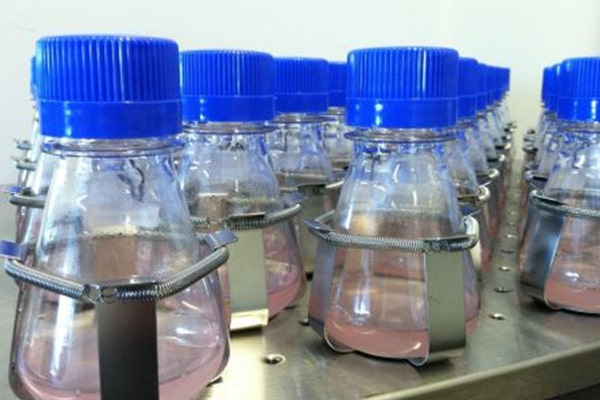
Pilot Scale Protein Production: Start With Decision-Quality Questions
Pilot scale protein production should answer questions that affect the next stage of the project. Before running the screen, define the intended downstream use, the material attributes that matter, the variables to compare, and the evidence that would support progression, redesign, or an alternative expression route.
Define the target and acceptance readouts
Relevant readouts may include total expression, soluble or secreted recovery, integrity, identity, homogeneity, activity, binding, assembly, or another target-specific measure. The screening panel should be limited to readouts that can distinguish the tested conditions and inform a decision.
Keep comparisons interpretable
Change a focused set of variables while keeping sample handling and analysis as consistent as practical. Record host or cell line, construct, media, induction or transfection details, culture temperature, harvest point, sample fraction, and analytical method. This makes it easier to separate a true condition effect from procedural variation.
Protein Expression Optimization by Expression System
Each expression system has a different set of controllable variables. The comparison below organizes practical screening variables.
Bacterial protein expression optimization
For E. coli expression, host strain, vector, construct, medium, temperature, induction duration, and inducer concentration can influence the amount and form of recovered protein. A strong total-expression result may still be unsuitable if the target is largely insoluble, degraded, or difficult to purify. Small-scale comparisons should therefore include the fraction relevant to the planned purification workflow. [1,2,6]
Baculovirus-infected insect cell optimization
For baculovirus-infected insect cells, the appropriate cell line, multiplicity of infection, and harvest time are target-dependent. A pilot can compare these factors while monitoring expression, cell condition, recovery, and product integrity. [3]
Mammalian cell expression optimization
For mammalian expression, a pilot may compare cell lines, expression construct, transfection conditions, temperature, harvest point, and viability. Small-scale workflows can help prioritize constructs or conditions before larger culture, provided the analytical readout is suitable for the product and sample matrix. [4,5]
Protein Expression Tests and Screening Readouts
These are representative screening categories rather than a required panel. The analytical plan should reflect the protein, expression system, project stage, and intended use.
Upscaling Protein Production From Small-Scale Results
Upscaling protein production should begin only after the pilot identifies a condition worth progressing and the team defines which variables must remain controlled. A small-scale result is evidence for a production route, not a guarantee that performance will transfer unchanged to a larger format.
Define progression criteria before scale-up
Progression criteria may address recoverable material, identity, integrity, homogeneity, activity, purification behavior, reproducibility, or another project-specific requirement. A condition that produces a higher expression signal may still be a weaker candidate if recovery or product quality declines.
Use a staged scale-up decision
A staged approach can confirm reproducibility and reveal where the process begins to diverge from pilot behavior. Document changes in culture performance, recovery, and product attributes at each stage so that redesign or re-optimization remains possible.
When to Use a Protein Expression Company or CRO
External support may be useful when a project requires multiple expression systems, parallel condition screening, coordinated purification, specialized analytics, or a path from pilot work to larger production. A prospective partner should explain which variables will be tested, how readouts will be interpreted, what material and data will be delivered, and how progression decisions will be made.
Questions to ask a protein expression partner
- Which expression systems, constructs, and conditions are scientifically justified for this target?
- Which small-scale protein expression tests will distinguish total expression from recoverable product?
- How will identity, integrity, homogeneity, activity, and stability be evaluated for the intended use?
- Which results will support scale-up, redesign, or an alternative expression route?
Small-Scale Expression Optimization Checklist
- Define the intended use and project-specific goals.
- Select the expression system and a focused set of variables to compare.
- Use consistent sample handling and analytical methods across conditions.
- Measure the fraction relevant to purification, not only total expression.
- Include a small-scale capture step when purification feasibility is a key decision.
- Track cell condition or viability when it affects interpretation.
- Record culture, induction, infection, transfection, and harvest details.
- Identify a condition for scale-up.
Frequently Asked Questions
What is upscaling protein production?
Upscaling protein production is the staged transfer of a selected expression and purification process to a larger production format. The work should preserve critical variables, test scale-sensitive assumptions, and confirm that recovery and product quality remain suitable.
What is pilot scale protein production?
Pilot scale protein production is a limited, decision-focused stage used to determine feasibility of producing a target protein and to establish a yield before larger scale production.
How do you optimize protein expression?
Optimization begins by defining the target and intended use, selecting a suitable expression system, comparing a focused set of variables, and measuring recoverable product with project-appropriate analytical readouts.
What is a small-scale protein expression test protocol?
A small-scale protocol is a plan for comparing expression conditions at limited scale. It should specify the variables, controls, sample fractions, analytical methods, and decision criteria. Exact conditions depend on the target and expression system.
Which variables matter for protein expression optimization in mammalian cells?
Potential variables include cell line, construct, transfection conditions, temperature, harvest point, and cell viability. Their relevance depend on the protein and the intended product attributes.
How do small-scale results guide large-scale protein expression?
Small-scale results help identify a promising route and the variables associated with recoverable, fit-for-use protein. Before larger production, the team should define progression criteria and test whether scale-sensitive operations alter recovery or product quality.
When should I use a protein production CRO?
A CRO may be useful when a project needs access to multiple expression platforms, parallel screening, purification development, specialized analytical methods, or a coordinated scale-up plan. Evaluate the scientific rationale, decision criteria, documentation, and deliverables.
Discuss Your Protein Expression Optimization Project
TrueCourse can help plan a target-specific workflow that connects small-scale screening, purification, analytical assessment, and scale-up decisions.
References
Peer-reviewed sources supporting the scientific context:
1. Graslund S, et al. Protein production and purification. Nature Methods. 2008;5:135-146. doi:10.1038/nmeth.f.202. Source
2. Hayat SMG, et al. Recombinant Protein Expression in Escherichia coli: What We Need to Know. Current Pharmaceutical Design. 2018;24(6):718-725. doi:10.2174/1381612824666180131121940. Source
3. McCall EJ, et al. Improvements to the throughput of recombinant protein expression in the baculovirus/insect cell system. Protein Expression and Purification. 2005;42(1):29-36. doi:10.1016/j.pep.2005.03.021. Source
4. Chapple SDJ, et al. Multiplexed expression and screening for recombinant protein production in mammalian cells. BMC Biotechnology. 2006;6:49. doi:10.1186/1472-6750-6-49. Source
5. Fu Y, et al. Improvement strategies for transient gene expression in mammalian cells. Applied Microbiology and Biotechnology. 2024;108:480. doi:10.1007/s00253-024-13315-y. Source
6. Kaur J, Kumar A, Kaur J. Strategies for optimization of heterologous protein expression in E. coli: Roadblocks and reinforcements. International Journal of Biological Macromolecules. 2018;106:803-822. doi:10.1016/j.ijbiomac.2017.08.080. Source